
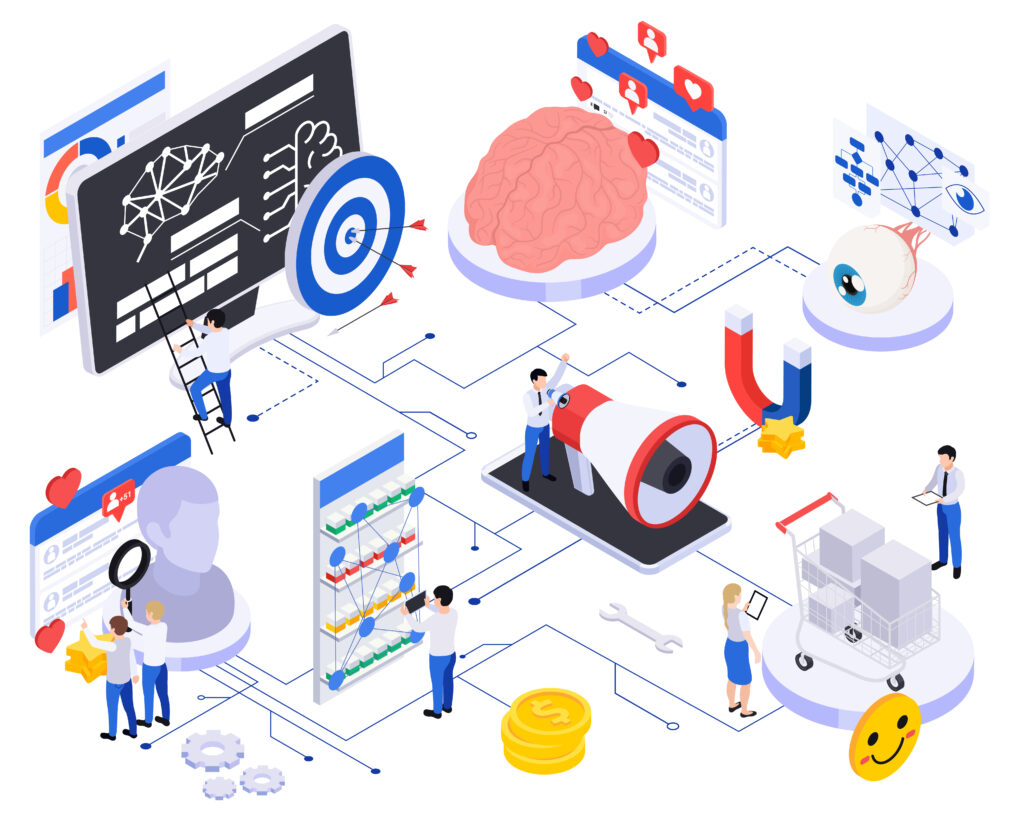
Introduction: Why Traditional Marketing Teams Are Struggling in the AI Era
Artificial intelligence has fundamentally changed how businesses approach marketing. AI can generate content, automate workflows, personalize customer experiences, analyze data in seconds, and even predict customer behavior. Yet despite these technological advances, many organizations continue to experience slow campaign launches, disconnected teams, inconsistent messaging, and poor execution.
The reason isn’t a lack of AI tools.
It’s organizational structure.
Many companies still operate with traditional marketing departments where strategy, content, design, SEO, paid advertising, analytics, sales enablement, and development function independently. Every campaign requires multiple handoffs, lengthy approval cycles, and repetitive communication. AI may accelerate individual tasks, but it cannot eliminate organizational bottlenecks.
This is why pod-based marketing teams are rapidly becoming the preferred operating model in 2026.
Instead of organizing people by function, businesses organize them around outcomes. Each pod contains specialists from different disciplines working together toward shared business objectives. AI becomes an amplifier rather than another disconnected tool.
For IT companies, financial institutions, SaaS businesses, startups, and enterprise organizations, this shift is helping marketing departments deliver faster campaigns, better customer experiences, and significantly higher returns.
Why Pod-Based Marketing Teams Matter More Than Ever
The explosion of AI tools has increased marketing output but also increased operational complexity.
Organizations now manage:
- AI content generation
- Marketing automation
- Customer journey personalization
- CRM systems
- SEO optimization
- Paid media automation
- Analytics platforms
- AI chatbots
- Sales enablement
- Product marketing
Each platform creates more data.
More data requires better coordination.
Without an efficient organizational model, AI simply creates more work instead of reducing it.
According to multiple industry studies from Deloitte, Gartner, McKinsey, and Asana’s work collaboration reports, organizations with cross-functional collaboration consistently outperform siloed teams in project delivery speed, innovation, and customer satisfaction.
The biggest competitive advantage in 2026 isn’t simply having better AI.
It’s having better organizational execution.
The Data Behind Cross-Functional Teams
Research across industries shows measurable improvements when organizations reduce departmental silos.
Several enterprise collaboration studies have found:
- Cross-functional teams complete projects up to 30–50% faster
- Employee productivity increases by 20–35%
- Decision-making cycles decrease by nearly 40%
- Marketing campaign launch times reduce significantly
- Customer satisfaction scores improve through better alignment
- Team communication overhead decreases substantially
These improvements become even larger when AI automation handles repetitive work.
Instead of spending time transferring work between departments, teams focus on creating customer value.
What Is a Pod-Based Marketing Team?
A pod-based marketing team is a small, autonomous, cross-functional group responsible for achieving one measurable business objective.
Unlike traditional departments, each pod owns strategy, execution, optimization, measurement, and reporting.
Instead of saying:
“The content team writes blogs.”
A pod says:
“We are responsible for increasing qualified inbound leads by 40%.”
Everyone shares the same goal.
Typical Marketing Pod Structure
A modern marketing pod might include:
- Growth Marketing Lead
- SEO Specialist
- AI Content Strategist
- Paid Ads Specialist
- Designer
- Marketing Operations Expert
- Web Developer
- Data Analyst
- CRM Automation Specialist
- Product Marketing Manager
Rather than reporting across departments, these professionals collaborate daily inside one team.
Traditional Marketing vs Pod-Based Marketing
| Traditional Marketing | Pod-Based Marketing |
|---|---|
| Department silos | Cross-functional collaboration |
| Multiple approvals | Faster decisions |
| Functional KPIs | Shared business KPIs |
| Slow execution | Continuous delivery |
| Sequential work | Parallel execution |
| Communication gaps | Daily collaboration |
| Long campaign timelines | Rapid iteration |
| AI used individually | AI integrated across workflows |
Why AI Makes Pod-Based Teams Even More Powerful
Artificial intelligence automates work.
Pods optimize decisions.
Together they create exponential gains.
AI can:
- Generate content
- Build campaign drafts
- Analyze customer data
- Personalize messaging
- Create landing pages
- Optimize ad targeting
- Forecast trends
But AI cannot decide:
- Which campaign deserves priority
- How sales and marketing should align
- Whether customer messaging is consistent
- Which customer segment offers the highest lifetime value
Pods solve these strategic challenges.
How Pod-Based Teams Reduce Friction Between Strategy and Execution
The biggest advantage of pod-based marketing teams is eliminating unnecessary handoffs.
Traditional workflow:
Marketing Strategy
↓
Content Team
↓
Design Team
↓
SEO Team
↓
Developer
↓
QA
↓
Paid Ads
↓
Analytics
↓
Reporting
Each step introduces delays.
A pod works differently.
Strategy is discussed together.
Content is created immediately.
Design happens simultaneously.
SEO optimization starts before publishing.
Developers prepare landing pages during content creation.
Analytics dashboards are configured before launch.
Campaigns move from idea to execution much faster.
Example Timeline
Traditional campaign:
- Planning: 2 weeks
- Content: 3 weeks
- Design: 2 weeks
- Development: 2 weeks
- QA: 1 week
- Launch: Week 10
Pod-based campaign:
- Collaborative planning
- Parallel execution
- Continuous optimization
Launch:
Approximately 3–4 weeks
AI Workflows Inside Modern Marketing Pods
Pods increasingly build AI-assisted workflows.
Examples include:
AI Content Workflow
Research
↓
AI outlines
↓
Human editing
↓
SEO optimization
↓
Publishing
↓
Performance monitoring
Paid Advertising Workflow
Audience research
↓
AI-generated creatives
↓
A/B testing
↓
Performance optimization
↓
Budget allocation
↓
Reporting
CRM Workflow
Lead captured
↓
AI qualification
↓
Email personalization
↓
Sales assignment
↓
Customer nurturing
↓
Conversion tracking
Pod Models for Different Industries
IT Companies
Pods often organize around:
- Product launches
- Developer adoption
- Enterprise sales
- Customer education
KPIs include:
- Product-qualified leads
- Demo requests
- Documentation traffic
- Developer engagement
Finance
Financial organizations require compliance alongside speed.
Pods typically include:
- Compliance specialist
- Content strategist
- Marketing automation expert
- CRM manager
- Analytics specialist
Benefits include:
- Faster regulatory approvals
- Consistent messaging
- Better lead quality
SaaS Startups
Startup pods prioritize growth.
Typical goals:
- User acquisition
- Product activation
- Trial conversions
- Customer retention
AI significantly reduces content production costs while pods maintain strategic direction.
Enterprise Organizations
Large companies often create multiple pods.
Examples:
- Brand pod
- Demand generation pod
- Customer success pod
- Product marketing pod
- Partner marketing pod
Each pod owns measurable outcomes.
Building a Pod-Based Marketing Team
Step 1: Organize Around Outcomes
Avoid creating pods based on departments.
Instead organize around:
- Revenue
- Customer acquisition
- Product launches
- Retention
- Geographic markets
Step 2: Select Cross-Functional Members
Each pod should include specialists capable of executing independently.
Step 3: Standardize AI Tools
Examples include:
- AI writing assistants
- CRM automation
- Analytics platforms
- Design automation
- Workflow automation
- Meeting summarization
- Predictive analytics
Step 4: Define Shared KPIs
Rather than individual metrics, track:
- Pipeline growth
- Revenue contribution
- Customer acquisition cost
- Lead conversion
- Customer lifetime value
- Campaign ROI
Step 5: Run Weekly Optimization Sessions
Pods continuously review:
- AI recommendations
- Customer insights
- Sales feedback
- Campaign performance
Optimization becomes continuous.
Practical Example: SaaS Product Launch
A software company launching an AI platform creates one growth pod.
Team
- Product marketer
- SEO specialist
- Designer
- Developer
- AI content strategist
- Paid media manager
- CRM specialist
AI Usage
- Content creation
- Competitor analysis
- Email personalization
- Landing page optimization
- Predictive lead scoring
Results
After 90 days:
- Campaign launch time reduced from 9 weeks to 4 weeks
- Organic traffic increased by 52%
- Lead conversion improved by 31%
- Customer acquisition cost decreased by 22%
- Marketing-qualified leads increased by 44%
- Email engagement increased by 36%
Measuring Success
High-performing pod-based marketing teams focus on business outcomes rather than activity metrics.
Revenue Metrics
- Marketing-influenced revenue
- Pipeline contribution
- Customer lifetime value
- Return on marketing investment
Operational Metrics
- Campaign cycle time
- Approval time
- Production speed
- AI automation rate
Customer Metrics
- Conversion rate
- Customer engagement
- Retention
- Net Promoter Score
Team Metrics
- Collaboration efficiency
- Workload balance
- Employee satisfaction
- Time saved through AI
Common Challenges
Resistance to Change
Employees may struggle with new responsibilities.
Solution:
Provide role clarity and AI training.
Too Many AI Tools
Organizations often purchase overlapping software.
Solution:
Standardize the technology stack.
Unclear Ownership
Pods fail without defined accountability.
Solution:
Assign measurable business goals.
Measuring the Wrong KPIs
Tracking output instead of outcomes limits improvement.
Focus on:
- Revenue
- Customer value
- Conversion
- Retention
Future Trends for Pod-Based Marketing Teams
Several developments are shaping the next generation of marketing organizations.
AI Agents
Specialized AI agents will assist each pod member with research, reporting, forecasting, scheduling, and campaign optimization.
Real-Time Decision Making
Marketing teams will rely on live dashboards instead of monthly reports.
Hyper-Personalization
Pods will combine AI-generated insights with first-party data to deliver individualized customer journeys across channels.
Predictive Marketing
Machine learning models will recommend budget allocation, content topics, audience segments, and campaign timing before marketers make decisions.
Outcome-Based Organizational Design
More companies will restructure around customer journeys and revenue objectives rather than traditional departments, making pod-based marketing teams a standard operating model.
Best Practices for Implementing Pod-Based Marketing Teams
Start Small
Launch one pilot pod around a single business objective before scaling organization-wide.
Align Leadership
Executive sponsorship ensures pods have authority to make decisions quickly.
Invest in AI Literacy
Train every pod member to use AI responsibly for research, automation, content creation, and analytics.
Build Shared Dashboards
Provide real-time visibility into KPIs so everyone works from the same data.
Encourage Continuous Learning
Review experiments regularly, document lessons learned, and refine workflows to improve execution over time.
Conclusion
AI has changed marketing forever, but technology alone cannot solve organizational inefficiencies. Companies that continue operating with siloed departments often find that AI increases output without improving outcomes.
Pod-based marketing teams provide a practical solution by aligning strategy, execution, analytics, and optimization within cross-functional groups focused on measurable business goals. When combined with AI, these teams reduce friction, accelerate campaign delivery, improve collaboration, and generate stronger business results.
For IT companies, financial organizations, startups, and technology businesses, adopting pod-based marketing teams is no longer just an operational experiment—it’s a competitive advantage. Organizations that begin restructuring today will be better positioned to adapt to rapid AI innovation, respond faster to market changes, and deliver consistent value to customers.
Next Steps
To successfully transition toward a pod-based model:
- Audit your current marketing workflow to identify bottlenecks.
- Define business outcomes instead of departmental responsibilities.
- Build a pilot pod with cross-functional expertise.
- Integrate AI tools into standardized workflows.
- Measure success using shared revenue and customer-focused KPIs.
- Scale successful pod structures across the organization.
By combining AI capabilities with outcome-driven organizational design, businesses can create marketing teams that are faster, more agile, and better equipped for sustained growth in 2026 and beyond.
Frequently Asked Questions (FAQs)
What is a pod-based marketing team?
A pod-based marketing team is a cross-functional group of specialists responsible for achieving a shared business objective. Instead of working in separate departments, team members collaborate on strategy, execution, optimization, and measurement.
Why are pod-based marketing teams important in 2026?
As AI automates more marketing tasks, organizational bottlenecks become the biggest barrier to growth. Pod-based marketing teams reduce delays, improve collaboration, and enable businesses to use AI more effectively.
Which businesses benefit most from pod-based marketing teams?
IT companies, SaaS businesses, fintech firms, startups, enterprise organizations, healthcare technology companies, and B2B service providers all benefit from pod-based marketing teams because they require close collaboration across multiple marketing functions.
How does AI support pod-based marketing teams?
AI assists pods by automating content creation, customer segmentation, predictive analytics, campaign optimization, workflow automation, and reporting. Human team members remain responsible for strategy, creativity, governance, and decision-making.
How do you measure the success of pod-based marketing teams?
Success is measured through shared business KPIs such as revenue growth, marketing-qualified leads, customer acquisition cost, campaign cycle time, conversion rate, customer lifetime value, retention, and return on marketing investment rather than individual departmental metrics.