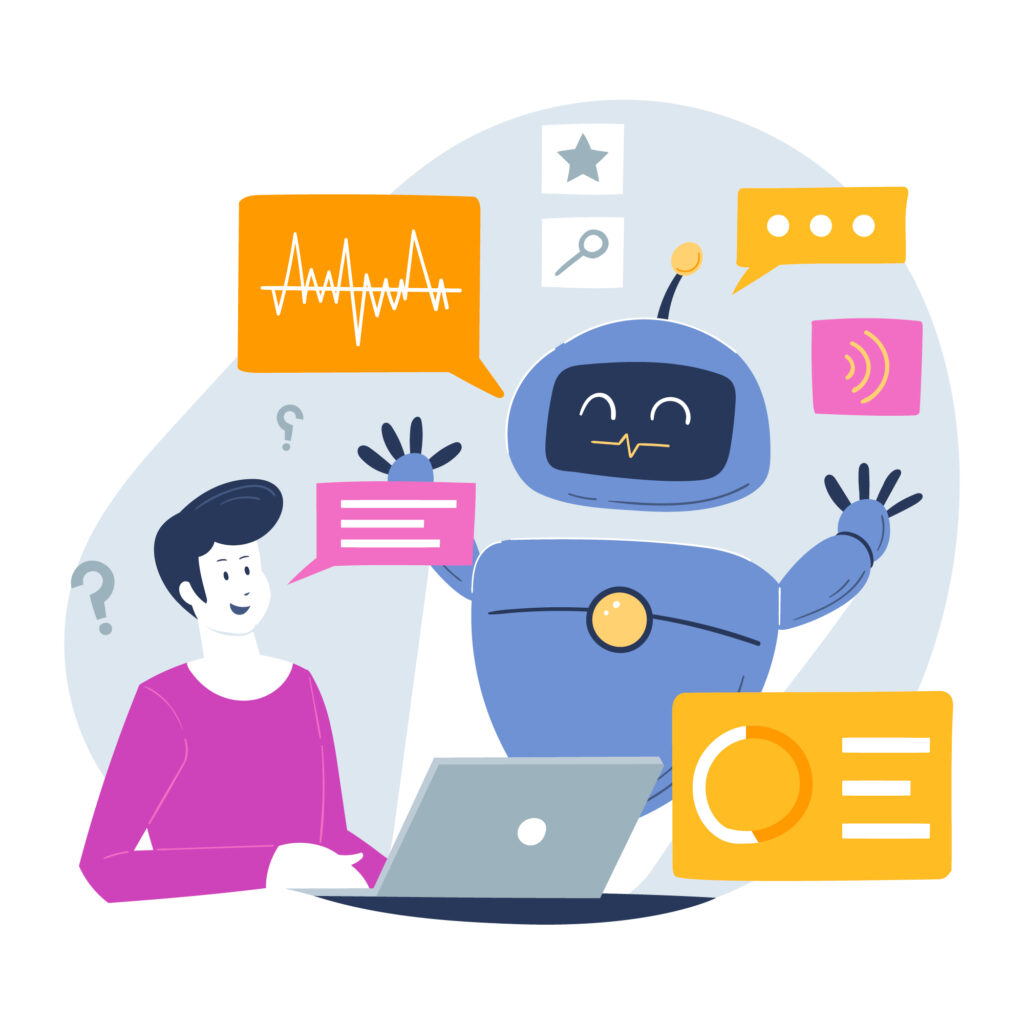
Artificial intelligence is no longer limited to chatbots that answer questions or generate text. In 2026, organizations are increasingly adopting AI agents capable of planning, reasoning, using external tools, and completing multi-step tasks with minimal human intervention. As software architectures continue evolving, many engineering leaders now describe AI agents as the new microservices because they encapsulate specialized capabilities that can be orchestrated together to solve complex business problems.
Traditional microservices transformed application development by breaking large monolithic systems into independent services. AI agents apply a similar principle to intelligence. Instead of building one large AI system, organizations deploy multiple specialized agents responsible for documentation, customer support, code review, monitoring, scheduling, data analysis, and operational workflows.
For technology teams, this shift represents more than another AI trend. It introduces a new architectural model where intelligent services collaborate alongside APIs, databases, event queues, and cloud infrastructure. Companies that successfully adopt agentic systems are improving developer productivity, reducing manual work, and accelerating software delivery without significantly increasing engineering headcount.
This guide explains how AI agents differ from traditional chatbots, why they resemble microservices, the architectural patterns behind successful deployments, practical enterprise use cases, implementation strategies, measurable business outcomes, and best practices for building secure, scalable agentic systems.
Why This Topic Matters
The software industry is experiencing a major transition from AI-assisted productivity toward AI-driven execution.
Several industry trends are driving this transformation:
- Engineering teams are expected to ship software faster with fewer resources.
- Enterprises generate massive amounts of documents and operational data that cannot be processed manually.
- Customer expectations require instant, personalized support across multiple channels.
- Cloud-native architectures naturally align with modular AI services.
- Large language models have become capable of planning, reasoning, and interacting with external systems.
Rather than asking AI to simply answer questions, organizations now expect AI to perform actual work.
Instead of acting as a conversational interface, an AI agent behaves like an autonomous software component capable of making decisions, calling APIs, using tools, validating outputs, and collaborating with other agents.
Understanding AI Agents
What Are AI Agents?
An AI agent is an intelligent software system that can:
- Understand goals
- Break tasks into multiple steps
- Choose appropriate tools
- Access external APIs
- Retrieve knowledge
- Execute workflows
- Evaluate results
- Retry when failures occur
- Continue until objectives are completed
Unlike traditional AI assistants, agents operate with a level of autonomy.
For example:
A chatbot answers:
“How do I reset my password?”
An AI agent can:
- Verify user identity
- Access authentication systems
- Reset credentials
- Notify the user
- Create an audit log
- Update the CRM
- Close the support ticket
The difference is execution rather than conversation.
AI Agents vs Chat-Based AI Tools
Traditional Chat Tools
Chat-based AI systems generally:
- Respond to prompts
- Generate text
- Summarize documents
- Translate languages
- Write code snippets
- Explain concepts
They stop once they generate a response.
Agentic Systems
Agentic systems continue working after producing an initial answer.
They can:
- Plan multiple actions
- Interact with databases
- Search internal knowledge
- Execute scripts
- Call APIs
- Monitor outcomes
- Coordinate multiple agents
- Retry failed operations
- Learn from previous execution history
This makes AI agents significantly more valuable for enterprise automation.
Why AI Agents Are the New Microservices
The comparison is surprisingly accurate.
Traditional microservices separate business capabilities into independent services.
Examples include:
- Authentication Service
- Payment Service
- Notification Service
- Inventory Service
- Analytics Service
Similarly, organizations now deploy specialized AI agents such as:
- Documentation Agent
- Code Review Agent
- Security Agent
- Customer Support Agent
- Finance Agent
- Monitoring Agent
- Scheduling Agent
Each agent has one clearly defined responsibility.
Instead of building one giant AI assistant, companies assemble many focused AI services that collaborate together.
This modular approach improves scalability, maintainability, reliability, and governance.
Characteristics Shared Between Microservices and AI Agents
Independent Responsibilities
Each agent solves one business problem extremely well.
Examples include:
- Invoice extraction
- Bug triage
- Pull request review
- Log analysis
- Customer onboarding
Loose Coupling
Agents communicate using APIs, events, or message queues.
Changing one agent rarely affects others.
Independent Scaling
Heavy customer support workloads can scale independently from document processing agents.
Reusability
A document extraction agent can serve:
- Finance
- HR
- Legal
- Procurement
without modification.
Fault Isolation
If one agent fails, others continue operating.
This mirrors traditional microservice resilience.
The Core Components of an Agentic System
Modern AI agents are rarely standalone.
Instead, they operate inside coordinated architectures.
Orchestrators
An orchestrator manages the overall workflow.
Responsibilities include:
- Assigning tasks
- Selecting agents
- Tracking progress
- Managing dependencies
- Recovering from failures
Example:
A customer complaint may require:
Customer Support Agent →
Sentiment Analysis Agent →
Refund Approval Agent →
CRM Update Agent →
Notification Agent
The orchestrator coordinates every step.
Tool Routers
AI agents become powerful because they can use tools.
A tool router decides:
- Which API to call
- Which database to query
- Which search engine to use
- Which internal service provides required information
Instead of overwhelming one agent with hundreds of capabilities, routing distributes work intelligently.
Guardrails
Autonomous systems require governance.
Guardrails ensure AI agents:
- Avoid unauthorized actions
- Protect sensitive information
- Validate generated outputs
- Prevent prompt injection attacks
- Respect compliance policies
- Require approval for high-risk actions
Without guardrails, autonomous execution becomes dangerous.
Common Enterprise Use Cases
Automated Document Processing
One of the fastest-growing applications of AI agents is document automation.
Agents can process:
- Contracts
- Purchase orders
- Tax forms
- Medical records
- Insurance claims
- Legal documents
Typical workflow:
- Receive uploaded document
- Classify document type
- Extract structured data
- Validate fields
- Detect missing information
- Store data
- Notify stakeholders
Many organizations reduce manual document processing time by 70–90%, while significantly improving consistency through automated validation.
AI-Powered Code Review
Development teams increasingly use AI agents during software delivery.
Tasks include:
- Reviewing pull requests
- Detecting security issues
- Suggesting refactoring
- Improving documentation
- Explaining complex code
- Identifying duplicate logic
- Writing unit tests
Instead of replacing developers, agents reduce repetitive engineering work.
Teams frequently report 30–50% faster pull request review cycles, especially for routine style, documentation, and quality checks.
Infrastructure Monitoring
Operations teams deploy AI agents for:
- Log analysis
- Alert correlation
- Root cause analysis
- Incident summarization
- Capacity forecasting
- Performance optimization
Rather than monitoring dashboards continuously, engineers receive prioritized incidents with suggested remediation steps.
This shortens incident response times and reduces alert fatigue.
Intelligent Customer Support
Customer support agents now perform far more than answering FAQs.
Modern AI agents can:
- Retrieve customer history
- Verify accounts
- Update CRM records
- Escalate complex issues
- Process refunds
- Generate tickets
- Schedule appointments
Organizations using agent-assisted support often report 20–40% lower average handling times while allowing human agents to focus on higher-value conversations.
Security Operations
Security teams use AI agents for:
- Threat intelligence
- Malware investigation
- Vulnerability prioritization
- Compliance reporting
- Security log summarization
- Incident response
Instead of replacing analysts, AI agents accelerate investigations.
Architectural Patterns for AI Agents
Single-Agent Architecture
Suitable for:
- Personal assistants
- Internal knowledge search
- Simple workflow automation
Advantages:
- Easy deployment
- Lower infrastructure cost
- Simple debugging
Limitations:
- Limited scalability
- Mixed responsibilities
- Lower specialization
Multi-Agent Systems
Multiple specialized agents collaborate.
Example:
Planning Agent →
Research Agent →
Writer Agent →
Fact Verification Agent →
Compliance Agent →
Publisher Agent
Each focuses on one responsibility.
Hierarchical Agents
A supervisor agent delegates work to subordinate agents.
Useful for:
- Enterprise workflows
- Project management
- Large automation pipelines
Event-Driven Agents
Agents react to events such as:
- New email
- Git commit
- Payment received
- Database update
- Customer signup
This integrates naturally with cloud-native architectures using message queues and event buses.
Practical Example: AI Agents in a Software Development Team
Imagine a developer opens a pull request.
Instead of waiting for manual review:
Step 1
A Review Agent checks coding standards.
Step 2
A Security Agent scans for vulnerabilities.
Step 3
A Testing Agent generates missing test cases.
Step 4
A Documentation Agent updates technical documentation.
Step 5
A Deployment Agent prepares release notes.
Step 6
The Orchestrator collects every result.
Step 7
Only significant issues are forwarded to the human reviewer.
Developers spend less time on repetitive tasks while maintaining oversight of final decisions.
Measuring Success: Key Metrics for AI Agents
Successful implementations focus on measurable outcomes rather than novelty.
Typical KPIs include:
Operational Efficiency
- Time saved per workflow
- Tasks automated
- Process completion rate
Engineering Productivity
- Pull request review time
- Deployment frequency
- Bug resolution time
- Developer satisfaction
Customer Experience
- First response time
- Resolution time
- Customer satisfaction
- Ticket deflection rate
Reliability
- Workflow success rate
- Error rate
- Retry frequency
- Manual intervention rate
Tracking these metrics helps teams refine agent performance over time.
Implementation Strategy for Tech Teams
Organizations typically follow a phased approach.
Phase 1
Identify repetitive workflows.
Examples:
- Documentation
- Testing
- Report generation
Phase 2
Deploy one specialized AI agent.
Avoid building an all-purpose assistant.
Phase 3
Connect business tools.
Examples:
- GitHub
- Jira
- Slack
- CRM
- Cloud platforms
Phase 4
Add orchestration.
Introduce workflows involving multiple agents.
Phase 5
Implement governance.
Add:
- Guardrails
- Approval workflows
- Logging
- Audit trails
- Security policies
Phase 6
Measure results.
Optimize based on:
- Accuracy
- Speed
- Cost
- User feedback
Results Organizations Are Seeing
Companies adopting AI agents are reporting measurable operational improvements across engineering, support, and business functions.
Common outcomes include:
- 70–90% reduction in manual document processing time.
- 30–50% faster pull request review cycles with AI-assisted code analysis.
- 20–40% lower customer support handling times through intelligent workflow automation.
- Higher workflow consistency by reducing repetitive human errors.
- Improved developer productivity by automating documentation, testing, and routine maintenance tasks.
- Faster incident response through AI-driven monitoring and log analysis.
Actual results depend on workflow complexity, data quality, governance, and integration maturity, but organizations consistently report productivity gains when AI agents augment human expertise instead of replacing it.
Challenges to Consider
AI agents introduce new engineering challenges.
Common concerns include:
- Hallucinated outputs
- Permission management
- Tool failures
- Security risks
- Prompt injection
- Compliance requirements
- Cost optimization
- Observability
These challenges reinforce the need for strong orchestration, monitoring, and guardrails.
The Future of AI Agents
Over the next few years, AI agents will become standard components of enterprise software.
Future trends include:
- Self-improving agent ecosystems
- Agent marketplaces
- Cross-company agent collaboration
- Memory-driven long-term planning
- Real-time multimodal reasoning
- Autonomous DevOps pipelines
- AI-native operating models
Just as APIs and microservices became foundational for cloud applications, AI agents are poised to become foundational for intelligent software systems.
Conclusion
The rise of AI agents marks one of the most significant shifts in enterprise software architecture since the adoption of microservices. Rather than functioning as simple conversational assistants, modern agentic systems can reason, plan, use tools, coordinate workflows, and complete complex tasks with appropriate human oversight.
For tech teams, the greatest value lies in deploying specialized AI agents that mirror the modular principles of microservices. By combining orchestrators, tool routers, and robust guardrails, organizations can automate document processing, streamline code reviews, improve infrastructure monitoring, and enhance customer support while maintaining security and governance.
The most successful implementations begin with a single, high-impact workflow, measure outcomes using clear KPIs, and expand incrementally into a broader ecosystem of collaborative agents. As agentic architectures continue to mature, teams that invest in modular, secure, and measurable AI capabilities today will be better positioned to build scalable, intelligent software platforms tomorrow.
Frequently Asked Questions (FAQs)
What are AI agents?
AI agents are autonomous software systems that can understand goals, plan multiple actions, use external tools, access data sources, and execute workflows with minimal human intervention, making them more capable than traditional chatbots.
How are AI agents different from chatbots?
Chatbots primarily generate responses to prompts, whereas AI agents can perform actions such as calling APIs, processing documents, updating databases, coordinating workflows, and completing multi-step tasks autonomously.
Why are AI agents compared to microservices?
Like microservices, AI agents are modular, independently deployable, and focused on a single responsibility. Multiple specialized agents can work together through orchestrators to solve larger business problems efficiently.
What industries benefit most from AI agents?
Industries such as software development, healthcare, finance, insurance, legal services, manufacturing, customer support, cybersecurity, and logistics benefit significantly from AI-powered automation and intelligent workflows.
How can organizations safely implement AI agents?
Organizations should begin with a single use case, integrate trusted tools, implement orchestration, establish guardrails for security and compliance, monitor performance continuously, and measure outcomes using business and operational KPIs.