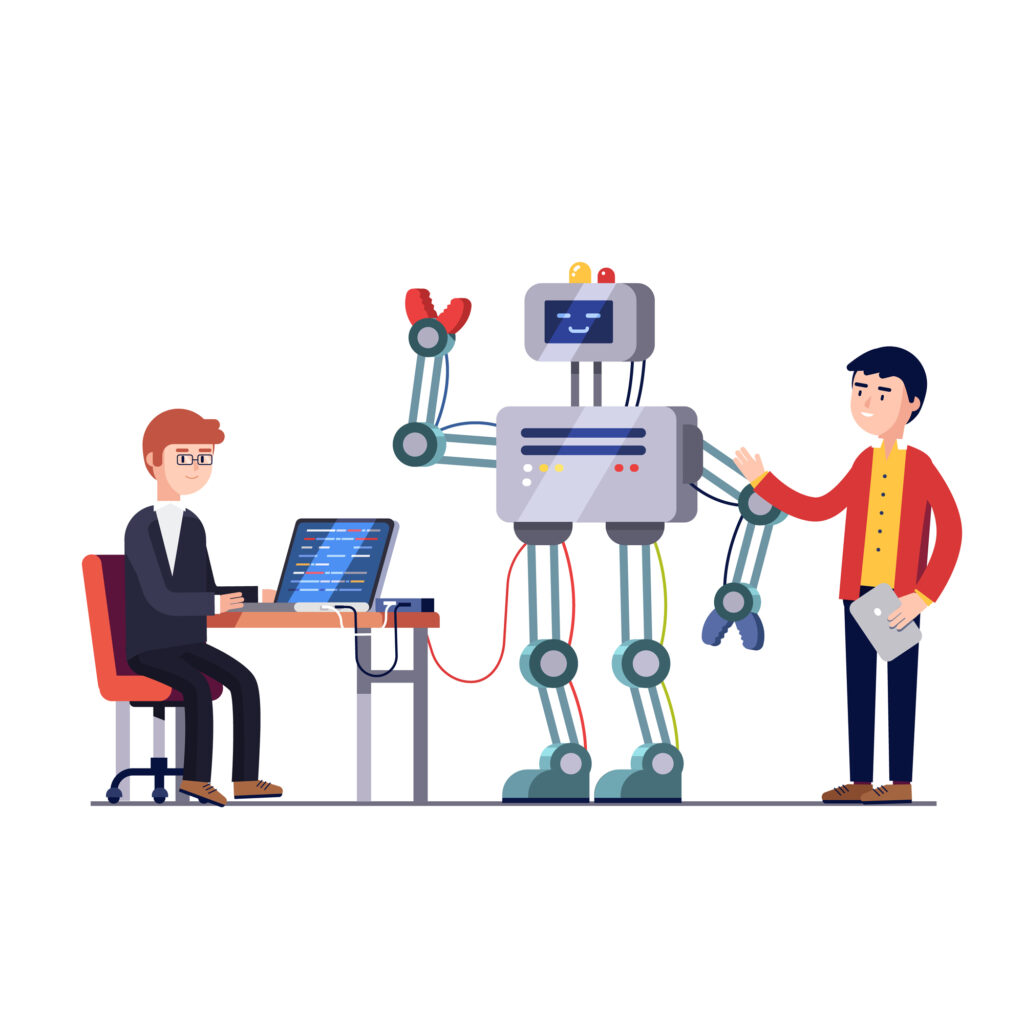
For years, artificial intelligence has been viewed primarily as a productivity tool that assists employees with writing emails, summarizing documents, or generating code. In 2026, that perception has fundamentally changed. Organizations are now deploying digital co-workers—AI agents capable of independently executing multi-step business processes, collaborating with employees, and coordinating with other software systems.
Unlike traditional automation, which follows rigid workflows, digital co-workers can understand objectives, reason through tasks, access enterprise systems, make contextual decisions, and escalate issues only when human judgment is required. These capabilities are reshaping organizational structures, redefining job roles, and changing how businesses think about hiring, productivity, and operational efficiency.
This shift matters because organizations are no longer asking whether AI should be adopted. Instead, they’re determining which business functions should receive digital co-workers first and how employees can collaborate with them effectively.
Recent industry research indicates that AI adoption continues to accelerate across enterprises, with generative AI investments growing rapidly as organizations seek measurable productivity improvements. Companies implementing agentic AI workflows report significant reductions in repetitive administrative work, faster decision cycles, and improved customer responsiveness while enabling employees to focus on higher-value strategic work.
The rise of digital co-workers represents one of the biggest organizational transformations since cloud computing. Businesses that embrace this transition thoughtfully will gain substantial competitive advantages, while those relying solely on manual processes risk falling behind.
What Are Digital Co-Workers?
A digital co-worker is an AI agent designed to perform work similarly to a human employee—but within defined responsibilities, governance policies, and organizational boundaries.
Unlike simple AI chatbots, digital co-workers can:
- Understand business goals
- Break complex objectives into smaller tasks
- Access multiple enterprise applications
- Retrieve and analyze data
- Execute approved actions
- Collaborate with humans
- Learn from feedback
- Escalate exceptions appropriately
Rather than replacing employees, digital co-workers extend workforce capacity by handling repetitive operational tasks.
Examples include:
- Procurement assistants
- Customer support agents
- Marketing campaign coordinators
- Finance reporting assistants
- HR onboarding coordinators
- IT service desk agents
Each operates as a specialized AI teammate rather than a standalone chatbot.
Why 2026 Is the Breakout Year for Digital Co-Workers
Several technological developments have converged to make digital co-workers practical.
Better AI Reasoning
Modern AI agents can maintain context across multiple steps, evaluate different approaches, and adjust plans when circumstances change.
Instead of answering isolated prompts, they complete entire workflows.
Enterprise Integration
Today’s AI agents connect directly with:
- CRM platforms
- ERP systems
- HR software
- Procurement tools
- Cloud storage
- Slack
- Microsoft Teams
- Business intelligence platforms
This allows digital co-workers to work inside existing enterprise ecosystems.
Lower Deployment Costs
Open-source models, efficient inference techniques, and cloud AI services have dramatically reduced deployment costs.
Organizations no longer need massive AI budgets to deploy practical digital co-workers.
Improved Governance
Modern AI platforms now provide:
- Permission controls
- Audit logs
- Human approvals
- Compliance monitoring
- Data security
- Role-based access
These capabilities make enterprise adoption significantly safer.
How AI Agents Are Reshaping Organizational Charts
Traditional organizations have long separated work into departments staffed entirely by people.
In 2026, many companies are redesigning teams to include both humans and AI agents.
Instead of:
Marketing Team
- Marketing Manager
- Campaign Executive
- Data Analyst
- Coordinator
Organizations increasingly structure teams as:
Marketing Team
- Marketing Manager
- Creative Strategist
- Campaign Specialist
- Campaign AI Agent
- Analytics AI Agent
- Content Operations AI Agent
The AI agents own operational execution while humans focus on planning, creativity, and strategic decisions.
This hybrid workforce increases output without proportionally increasing headcount.
Procurement: AI Agents Managing Purchasing Workflows
Procurement contains numerous repetitive administrative activities that are ideal for digital co-workers.
Example Procurement Workflow
A procurement AI agent can:
Identify inventory shortages
The agent continuously monitors inventory levels across warehouses.
Compare suppliers
It automatically retrieves:
- Vendor pricing
- Delivery timelines
- Historical performance
- Sustainability ratings
Generate purchase requests
Rather than waiting for employees, the agent prepares procurement documentation automatically.
Route approvals
Purchase requests move to managers only when necessary.
Track deliveries
The agent monitors shipping status and proactively flags delays.
Business Impact
Organizations implementing procurement AI commonly experience:
- Faster purchase processing
- Reduced manual paperwork
- Improved supplier visibility
- Better purchasing compliance
- Lower administrative costs
Employees spend more time negotiating strategic contracts rather than processing forms.
IT Service Desk: AI Ticket Triage Without Manual Bottlenecks
IT departments often struggle with thousands of repetitive support requests.
Digital co-workers dramatically reduce first-level support workloads.
Example Ticket Flow
Employee submits:
“My VPN stopped working.”
The AI agent:
- Identifies the issue category
- Checks known incidents
- Verifies account status
- Suggests fixes
- Runs approved diagnostic scripts
- Resolves common problems automatically
- Escalates only complex cases
Measurable Outcomes
Organizations frequently report:
- Faster ticket classification
- Higher first-contact resolution rates
- Reduced response times
- Increased employee satisfaction
IT engineers spend less time resetting passwords and more time improving infrastructure.
Reporting Automation: From Days to Minutes
Business reporting traditionally requires significant manual effort.
A digital co-worker can automatically:
- Collect data
- Clean datasets
- Generate charts
- Compare KPIs
- Highlight anomalies
- Draft executive summaries
- Distribute reports
Example
Every Monday morning:
The AI agent gathers:
- Sales data
- Marketing spend
- Customer churn
- Revenue
- Pipeline updates
It creates a dashboard with commentary explaining:
- What changed
- Why it changed
- Recommended actions
Managers review insights instead of building spreadsheets.
Campaign Operations Become Autonomous
Marketing departments increasingly deploy digital co-workers to coordinate campaigns.
Campaign Tasks AI Can Execute
- Schedule emails
- Publish social media
- Generate campaign reports
- Monitor performance
- Allocate advertising budgets
- Recommend creative updates
- Pause underperforming ads
- Notify managers of opportunities
Instead of manually coordinating dozens of tools, marketers supervise AI execution.
Employee-Led AI Adoption Is Driving the Biggest Change
One surprising trend in 2026 is that employees—not executives—are increasingly driving AI adoption.
Workers recognize repetitive tasks consume valuable time.
Examples include:
Sales Teams
Sales representatives request AI to:
- Update CRM records
- Draft proposals
- Summarize meetings
- Schedule follow-ups
Finance Teams
Employees automate:
- Invoice matching
- Expense validation
- Monthly reconciliations
HR Teams
Recruiters use AI for:
- Resume screening
- Candidate scheduling
- Interview summaries
- Offer letter preparation
Marketing Teams
Staff delegate:
- Campaign setup
- Asset organization
- Analytics reporting
Employees see AI as removing administrative burden rather than threatening employment.
Digital Co-Workers Create New Roles Instead of Simply Eliminating Jobs
While some routine responsibilities shrink, entirely new positions are emerging.
AI Workflow Designer
Designs business workflows executed by AI agents.
AI Operations Manager
Monitors AI performance and governance.
Prompt Engineer (Evolved)
Develops organizational reasoning frameworks instead of isolated prompts.
AI Compliance Lead
Ensures regulatory compliance.
AI Trainer
Improves agent behavior using business feedback.
Organizations increasingly hire professionals who understand both business processes and AI systems.
Measuring the Business Impact of Digital Co-Workers
Successful implementations focus on measurable outcomes rather than hype.
Productivity
Organizations often report administrative workload reductions ranging from 20–40% in targeted processes after deploying AI-assisted workflows.
Response Time
Automated ticket routing and reporting can reduce turnaround times by 50–80% depending on workflow complexity.
Employee Satisfaction
Internal surveys frequently show improved job satisfaction when repetitive work is reduced, allowing employees to focus on meaningful projects.
Operational Accuracy
Standardized AI workflows help reduce manual errors in documentation, reporting, and repetitive business operations.
The most successful organizations establish clear KPIs before deployment and continuously measure AI performance against business objectives.
Change Management: The Difference Between Success and Failure
Technology alone doesn’t transform organizations.
People do.
Set Clear Expectations
Employees should understand:
- What AI will do
- What AI won’t do
- Human responsibilities
- Escalation procedures
Transparency builds trust.
Invest in Reskilling
Organizations should train employees in:
- AI supervision
- Workflow design
- Data interpretation
- Critical thinking
- Cross-functional collaboration
Future employees will increasingly manage AI systems rather than perform repetitive tasks manually.
Encourage Human Oversight
Every digital co-worker requires:
- Approval checkpoints
- Monitoring
- Feedback loops
- Exception handling
Humans remain accountable for critical decisions.
Avoiding “AI Theater”
One of the biggest mistakes organizations make is deploying AI for appearances rather than outcomes.
Signs of AI theater include:
- Deploying chatbots with no business purpose
- Launching pilots that never scale
- Measuring prompts instead of business outcomes
- Adding AI to products without solving customer problems
Instead, organizations should begin with clearly defined operational bottlenecks.
Ask:
- Which repetitive tasks consume the most employee time?
- Which workflows create delays?
- Where do manual errors occur?
- Which decisions require structured data?
Digital co-workers should solve measurable business problems—not generate headlines.
Best Practices for Implementing Digital Co-Workers
Start Small
Choose one repetitive workflow before expanding across departments.
Measure Everything
Track:
- Time saved
- Cost reductions
- Error rates
- Employee satisfaction
- Customer outcomes
Keep Humans in Control
AI should augment decision-making rather than replace accountability.
Improve Continuously
Digital co-workers perform best when refined using employee feedback and operational data.
The Future of Work: Humans Plus AI
The workplace of 2026 isn’t about humans competing with AI.
It’s about collaboration.
Employees increasingly become:
- Decision-makers
- Strategists
- Relationship builders
- Creative problem solvers
Meanwhile, digital co-workers handle:
- Data gathering
- Routine reporting
- Administrative execution
- System coordination
- Workflow automation
Organizations adopting this hybrid model gain agility, improve productivity, and free employees to focus on work that creates lasting business value.
Conclusion
The rise of digital co-workers marks a major evolution in enterprise operations. Rather than functioning as simple assistants, modern AI agents execute procurement tasks, triage IT tickets, automate reporting, coordinate marketing campaigns, and support countless other business processes with speed and consistency.
The organizations seeing the greatest return are not replacing employees with AI—they are redesigning work so humans and digital co-workers complement each other. Employees benefit by spending less time on repetitive administration and more time on innovation, customer engagement, and strategic decision-making. At the same time, businesses gain measurable improvements in productivity, operational efficiency, and responsiveness.
Success, however, depends on thoughtful implementation. Companies must invest in reskilling, establish governance, define measurable outcomes, and avoid “AI theater” that prioritizes novelty over value. The future belongs to organizations that treat AI as a trusted teammate rather than a standalone technology initiative.
Next Steps
If your organization is preparing for AI adoption in 2026:
- Identify repetitive workflows with the highest manual effort.
- Launch a pilot using a single digital co-worker for one department.
- Define KPIs such as time saved, accuracy, and employee satisfaction.
- Train employees to supervise and collaborate with AI agents.
- Expand gradually based on measurable business outcomes and continuous feedback.
Businesses that take these practical steps today will be better positioned to thrive in an increasingly AI-driven workplace.
Frequently Asked Questions (FAQs)
What is a digital co-worker?
A digital co-worker is an AI agent that performs business tasks such as reporting, procurement, customer support, or workflow automation while collaborating with human employees and following organizational rules.
Will digital co-workers replace human jobs?
In most cases, digital co-workers automate repetitive administrative work rather than replace entire jobs. They allow employees to focus on strategic thinking, creativity, customer relationships, and decision-making.
Which business departments benefit most from digital co-workers?
Departments with repetitive workflows—including procurement, IT support, finance, HR, customer service, sales, and marketing—often see the greatest improvements in efficiency and productivity.
How can companies avoid “AI theater”?
Organizations should focus on solving measurable business problems, define clear success metrics, involve employees in adoption, and continuously evaluate outcomes instead of deploying AI solely for publicity or trend-following.
What skills will employees need to work alongside digital co-workers?
Employees will increasingly need skills such as AI supervision, workflow design, data analysis, critical thinking, ethical decision-making, and cross-functional collaboration to maximize the value of digital co-workers.