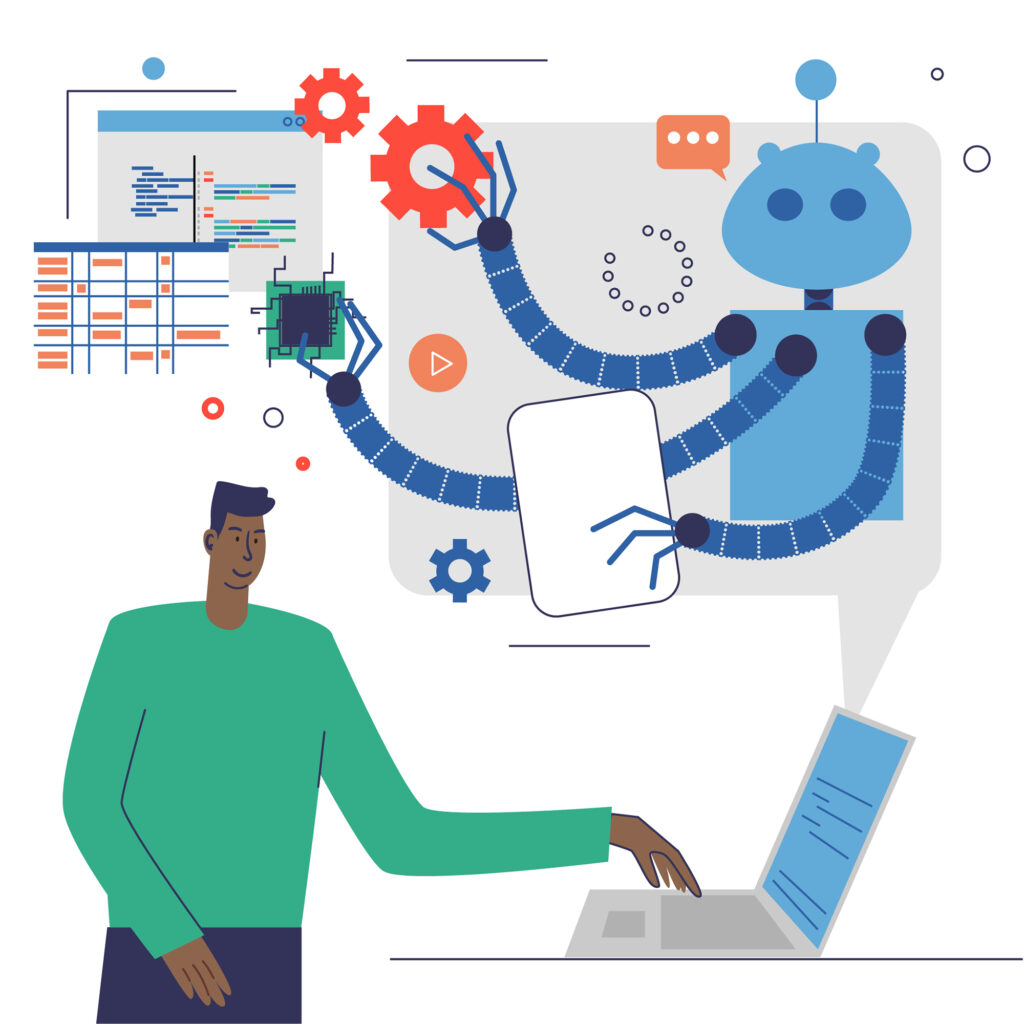
Artificial intelligence has changed how agencies operate. What started as a productivity experiment has evolved into a complete operational shift. Today, the most competitive agencies are no longer just selling AI services to clients — they are using AI internally to improve speed, quality, scalability, and profitability.
At Easify AI, AI is not treated as a trend or a marketing buzzword. It is integrated into daily operations, internal workflows, research, communication systems, automation pipelines, client delivery, and strategic planning. The agency focuses on practical AI implementation, workflow automation, AI strategy, Microsoft Copilot integration, and custom AI solutions for businesses. (Easify AI)
This matters because many businesses still misunderstand what practical AI adoption looks like. Some companies assume AI is only useful for content generation. Others believe it can completely replace teams overnight. In reality, the highest-performing organizations use AI as a force multiplier — helping skilled people work faster, make better decisions, and eliminate repetitive operational tasks.
In this guide, we will break down exactly how AI agencies like Easify AI use AI internally, what systems provide the biggest operational impact, which workflows can realistically be automated today, and how businesses can adopt similar strategies.
Why AI-First Agencies Are Growing Faster
Traditional agencies often struggle with operational bottlenecks:
- Slow research cycles
- Manual reporting
- Repetitive client onboarding
- Content production delays
- Team communication inefficiencies
- Inconsistent documentation
- Scaling limitations
AI changes this equation.
Instead of increasing headcount for every new client, AI-driven agencies build systems that automate repetitive processes while allowing human teams to focus on strategy, creativity, problem-solving, and relationship management.
According to Easify AI, their focus is on “practical AI solutions,” “workflow automation,” and rapid AI implementation for measurable productivity improvements. (Easify AI)
The result is a more scalable operational model.
The Core Philosophy: AI Augmentation, Not AI Replacement
One of the biggest misconceptions about AI is that businesses should fully replace people with automation.
That rarely works well in real-world operations.
The more practical approach is AI augmentation:
- Humans define strategy
- AI accelerates execution
- Humans validate outputs
- AI handles repetitive operations
- Humans manage relationships and decision-making
This hybrid structure creates significantly better outcomes than fully manual or fully automated systems.
At Easify AI, the emphasis appears to be on helping organizations “adopt, train, and implement AI solutions” across teams and operations rather than replacing entire departments. (Easify AI)
That distinction is important.
How Easify AI Uses AI Internally
1. AI for Internal Knowledge Management
One of the first operational problems AI solves inside agencies is fragmented knowledge.
Agencies generate enormous amounts of internal information:
- Client requirements
- SOPs
- Strategy documents
- Technical documentation
- Meeting notes
- Research findings
- Training materials
- Campaign insights
Without AI systems, this information becomes difficult to search and reuse.
AI-powered knowledge systems help agencies:
- Search internal documentation instantly
- Generate summaries from meetings
- Retrieve historical project insights
- Recommend reusable workflows
- Build internal AI copilots
This reduces onboarding time for new employees and improves operational consistency across teams.
For example, instead of manually searching through hundreds of documents, team members can ask an internal AI assistant:
- “Show the SEO workflow used for ecommerce clients”
- “Summarize the last client strategy meeting”
- “Find automation templates for lead qualification”
This dramatically reduces operational friction.
2. AI-Powered Content Operations
Content creation is one of the most obvious use cases for AI, but mature agencies go far beyond basic AI writing.
Internally, AI is used to accelerate:
- Blog outlines
- Research summaries
- SEO optimization
- Content briefs
- Social media drafts
- Video scripting
- Email frameworks
- Ad copy ideation
However, the final content is still reviewed, refined, fact-checked, and strategically aligned by humans.
The difference is speed.
A task that previously required 6 hours may now require 90 minutes.
At scale, this creates massive operational leverage.
Practical Example
Instead of starting from a blank page, content strategists can:
- Use AI to analyze competitors
- Generate topical clusters
- Build article structures
- Create draft frameworks
- Optimize for SEO intent
- Repurpose long-form content into multiple formats
The human team then focuses on:
- Expertise
- Original insights
- Brand voice
- Accuracy
- Conversion optimization
This is how modern AI agencies scale content production without sacrificing quality.
3. AI Automation for Client Delivery
AI agencies increasingly automate operational workflows using tools such as:
- AI agents
- Workflow automation platforms
- CRM automations
- AI copilots
- API integrations
- Document processing systems
Easify AI specifically highlights workflow automation and rapid AI implementation as core services. (Easify AI)
Internally, automation can handle:
Lead Management
- Automatic lead qualification
- CRM updates
- Email routing
- Meeting scheduling
- Proposal generation
Project Operations
- Task creation
- Deadline reminders
- AI-generated status reports
- Resource allocation recommendations
Client Communication
- Meeting summaries
- Follow-up email drafts
- AI-generated progress reports
- FAQ response systems
Data Processing
- Spreadsheet analysis
- Dashboard generation
- KPI monitoring
- Trend detection
The cumulative impact is significant because agencies spend a huge percentage of time on operational coordination rather than strategic execution.
AI reduces that operational overhead.
4. AI for Research and Strategy
Research is one of the most time-consuming agency activities.
Teams often spend hours collecting:
- Market trends
- Competitor analysis
- SEO opportunities
- Audience insights
- Technology comparisons
- Industry data
AI dramatically accelerates this process.
Modern AI workflows can:
- Summarize large datasets
- Extract insights from reports
- Identify market trends
- Cluster audience intent
- Analyze competitors
- Generate strategic recommendations
This enables agencies to move faster without compromising analytical depth.
Example Workflow
A strategist researching an ecommerce client might use AI to:
- Analyze competitor positioning
- Identify trending keywords
- Detect customer pain points
- Summarize reviews
- Generate campaign hypotheses
- Build strategic frameworks
What previously required days can now happen in hours.
5. AI Meeting Assistants and Operational Coordination
Meeting overload is a major productivity issue in agencies.
AI meeting systems help by:
- Recording conversations
- Generating summaries
- Extracting action items
- Assigning tasks
- Updating project systems automatically
This improves execution consistency and reduces communication gaps.
Instead of relying on manual note-taking, agencies create searchable organizational memory from every discussion.
Over time, this becomes a valuable internal knowledge asset.
6. AI for SOP Creation and Team Training
Operational scaling requires documentation.
But most agencies delay SOP creation because it is time-consuming.
AI simplifies this process by:
- Converting workflows into documentation
- Generating onboarding guides
- Creating training materials
- Building process checklists
- Updating documentation automatically
Easify AI emphasizes AI training and adoption support for teams. (Easify AI)
Internally, this type of system helps maintain consistency as agencies grow.
New employees can:
- Learn workflows faster
- Access AI-powered support
- Retrieve process guidance instantly
- Reduce dependency on senior staff
7. AI Agents for Repetitive Operational Tasks
One of the fastest-growing areas in AI operations is the use of AI agents.
AI agents can perform semi-autonomous tasks such as:
- Monitoring inboxes
- Following up with leads
- Collecting information
- Updating databases
- Scheduling workflows
- Triggering automations
Research into reusable AI agent workflows shows strong potential for improving automation reliability and reducing manual intervention.
While AI agents still require human oversight, they are becoming increasingly useful for operational support functions inside agencies.
Benefits of Using AI Internally in an Agency
Faster Project Delivery
AI compresses execution timelines by accelerating:
- Research
- Drafting
- Reporting
- Analysis
- Documentation
This improves turnaround time without necessarily increasing staff size.
Improved Profit Margins
Operational efficiency reduces labor overhead for repetitive tasks.
Agencies can:
- Handle more clients
- Reduce administrative time
- Increase output per employee
- Improve scalability
Better Consistency
AI-supported workflows reduce variability in:
- Reporting
- Documentation
- Processes
- Client communication
Stronger Strategic Focus
When repetitive work is automated, teams can focus on:
- Client relationships
- Strategy
- Creative direction
- Business growth
Faster Experimentation
AI allows agencies to test:
- Campaign concepts
- Content variations
- Workflow ideas
- Automation structures
at much higher speed.
The Human Skills That Matter More in AI Agencies
Ironically, AI increases the importance of certain human capabilities.
As automation expands, the highest-value skills become:
- Strategic thinking
- Critical analysis
- Communication
- Creativity
- Systems design
- Relationship management
- Decision-making
- Ethical oversight
A TechRadar interview discussing AI’s impact on agencies noted that successful agencies are evolving from “service providers” into strategic partners focused on outcomes rather than repetitive production tasks.
This reflects a broader industry shift.
The future agency is not simply “AI-powered.”
It is strategically AI-orchestrated.
Common Mistakes Agencies Make with AI
1. Automating Broken Processes
AI cannot fix poorly designed workflows.
If the underlying process is inefficient, automation often amplifies the problem.
2. Over-Reliance on AI Outputs
AI-generated content and recommendations still require:
- Validation
- Editing
- Strategic review
- Fact-checking
Human oversight remains essential.
3. Using Too Many Tools
Many agencies adopt dozens of disconnected AI tools without operational alignment.
The better approach is building integrated systems.
4. Ignoring Team Adoption
AI implementation fails when teams:
- Do not understand workflows
- Resist adoption
- Lack training
- Have unclear usage policies
This is why AI training is becoming a major service category. (Easify AI)
What Businesses Can Learn from AI Agencies
Businesses do not need to become AI companies overnight.
But they can adopt the same operational principles used by AI-first agencies.
Start with High-Repetition Tasks
Good first candidates include:
- Email responses
- Reporting
- Documentation
- Meeting summaries
- CRM updates
- Internal search
Focus on ROI
The best AI implementations solve:
- Time inefficiency
- Bottlenecks
- Manual repetition
- Operational delays
Build Gradually
Successful AI adoption is iterative.
Start small:
- Identify operational pain points
- Test workflows
- Measure productivity gains
- Expand gradually
Combine AI with Human Expertise
The strongest operational systems combine:
- Human judgment
- AI acceleration
- Workflow automation
- Strategic oversight
The Future of AI-Driven Agencies
AI agencies are moving toward increasingly integrated operational ecosystems.
Future developments likely include:
- Autonomous workflow orchestration
- Multi-agent systems
- AI-native project management
- Predictive business operations
- Real-time operational optimization
Research into agentic AI systems and autonomous workflow refinement suggests this direction is accelerating rapidly.
However, the agencies that succeed long term will not simply use more AI tools.
They will build better operational systems around AI.
That includes:
- Governance
- Quality control
- Human oversight
- Workflow architecture
- Strategic integration
Conclusion
The conversation around AI is shifting from experimentation to operational execution.
The most effective agencies are no longer asking:
“Should we use AI?”
They are asking:
“How do we integrate AI into every meaningful operational layer?”
At Easify AI, the focus on practical AI implementation, workflow automation, training, and scalable AI solutions reflects the direction modern agencies are heading.
The biggest lesson businesses can learn is that AI works best when it enhances human capability instead of attempting to replace it entirely.
Organizations that combine:
- AI automation
- operational systems
- human expertise
- strategic thinking
will scale faster, operate more efficiently, and adapt more effectively in the evolving digital economy.
The future of agencies is not purely human or purely AI.
It is collaborative intelligence at operational scale.
FAQs
What does “how AI agency uses AI internally” actually mean?
It refers to how AI agencies integrate artificial intelligence into their own internal operations, including automation, content creation, project management, research, client communication, workflow optimization, and knowledge management.
How does Easify AI use AI internally?
Based on its public positioning, Easify AI uses AI for workflow automation, AI strategy implementation, operational productivity, AI training, and scalable AI solutions for business processes.
Can AI completely replace agency teams?
No. AI is most effective when augmenting skilled professionals rather than replacing them entirely. Human oversight, creativity, strategy, and decision-making remain essential.
What is the best first step for businesses adopting AI internally?
Start with repetitive operational tasks that consume significant manual time, such as reporting, documentation, CRM updates, or meeting summaries. Measure ROI before expanding into larger AI initiatives.
What are the biggest benefits of using AI inside an agency?
The main benefits include:
Faster execution
Improved productivity
Reduced repetitive work
Better operational consistency
Increased scalability
Higher profit margins