Introduction
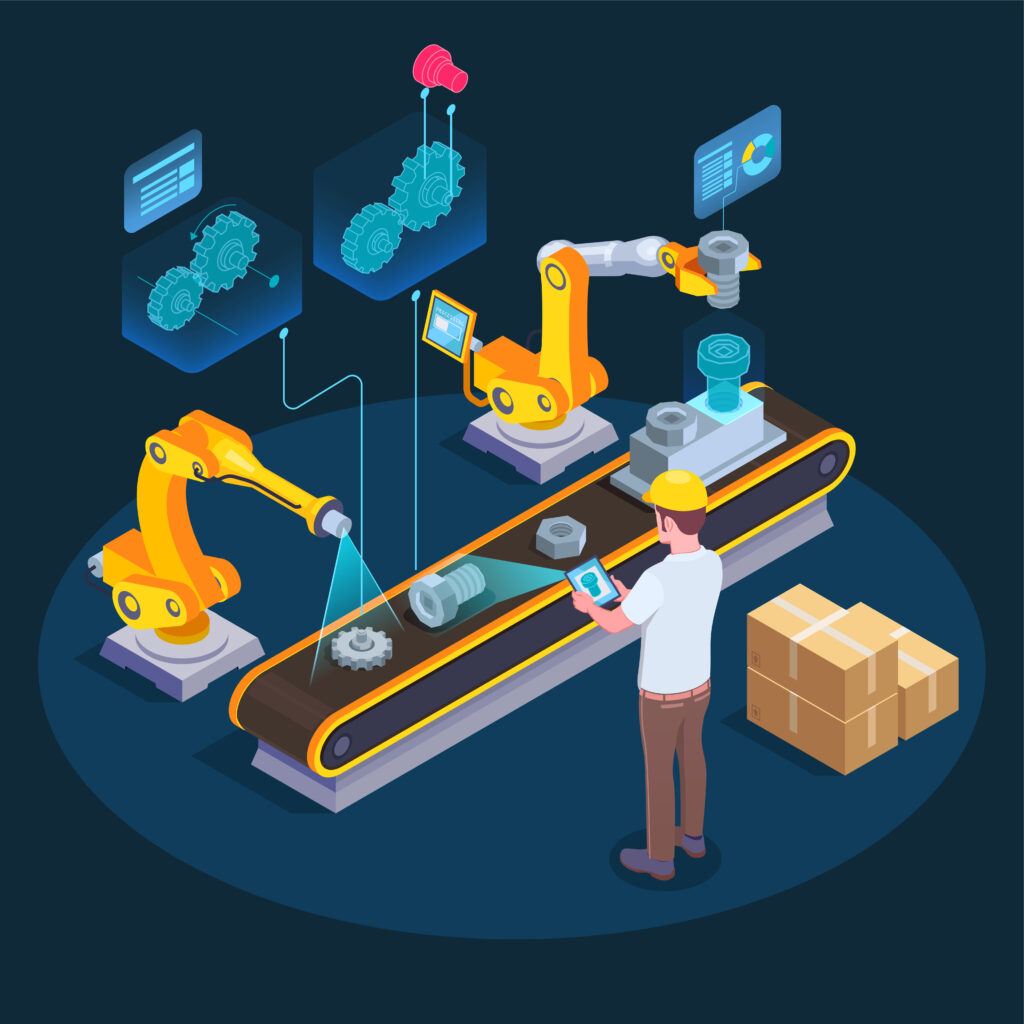
The manufacturing industry is undergoing one of the most significant technological transformations in modern history. From smart factories and predictive maintenance to intelligent robotics and automated quality control, artificial intelligence (AI) is redefining how industrial operations function. Businesses that once relied heavily on manual monitoring and reactive decision-making are now embracing data-driven automation to improve efficiency, reduce downtime, and increase profitability.
The rise of AI in industrial manufacturing is not simply a trend — it is becoming a competitive necessity. Manufacturers worldwide face growing pressure to improve production speed, maintain product quality, reduce operational costs, and adapt to fluctuating market demands. Traditional systems often struggle to meet these expectations efficiently. AI-powered technologies help bridge that gap by enabling machines and systems to learn, analyze, predict, and optimize operations in real time.
Industrial manufacturers generate massive amounts of data from machinery, sensors, production lines, supply chains, and customer demand patterns. AI can process and interpret this data far faster and more accurately than humans, allowing manufacturers to make better decisions and automate complex operational tasks.
In this comprehensive guide, we will explore how AI is transforming industrial manufacturing operations, the major benefits it offers, practical applications, real-world examples, challenges businesses face during adoption, and what the future of AI-driven manufacturing looks like.
What Is AI in Industrial Manufacturing?
AI in industrial manufacturing refers to the use of artificial intelligence technologies such as machine learning, computer vision, robotics, predictive analytics, and natural language processing to improve manufacturing processes and industrial operations.
These technologies enable machines and systems to:
- Analyze operational data
- Predict equipment failures
- Automate repetitive tasks
- Improve production efficiency
- Detect defects in products
- Optimize supply chains
- Support intelligent decision-making
AI systems can continuously learn from historical and real-time data, making manufacturing operations more adaptive, accurate, and efficient over time.
Why AI Matters in Industrial Manufacturing
Industrial manufacturing environments are complex. They involve machinery, logistics, workforce management, raw materials, production scheduling, compliance standards, and customer delivery timelines. Even minor inefficiencies can result in significant financial losses.
AI matters because it helps manufacturers solve critical operational challenges such as:
- Unexpected equipment downtime
- Human error in quality inspections
- Production bottlenecks
- Rising labor costs
- Supply chain disruptions
- Energy inefficiency
- Inventory mismanagement
With AI-driven systems, manufacturers gain better visibility into operations and can proactively address issues before they become costly problems.
Key Technologies Powering AI in Industrial Manufacturing
1. Machine Learning
Machine learning algorithms analyze production and operational data to identify patterns and predict outcomes. These models improve continuously as more data becomes available.
Applications include:
- Predictive maintenance
- Demand forecasting
- Production optimization
- Inventory planning
2. Computer Vision
Computer vision uses AI-powered image recognition to inspect products, monitor assembly lines, and detect defects automatically.
Benefits include:
- Faster quality inspections
- Reduced human error
- Real-time monitoring
- Improved product consistency
3. Industrial Robotics
AI-powered robots can perform repetitive manufacturing tasks with high precision and speed. Unlike traditional robots, AI-enabled robots can adapt to changing conditions and workflows.
Common uses:
- Welding
- Packaging
- Material handling
- Assembly operations
4. Predictive Analytics
Predictive analytics uses historical and real-time data to forecast future events such as machine failures, production delays, or demand fluctuations.
This helps manufacturers:
- Reduce downtime
- Improve maintenance scheduling
- Optimize production planning
5. Internet of Things (IoT)
IoT devices collect data from sensors installed on machines, production lines, and industrial systems. AI analyzes this data to generate insights and automate responses.
Together, AI and IoT form the foundation of smart manufacturing.
Major Benefits of AI in Industrial Manufacturing
Improved Operational Efficiency
AI systems can monitor production processes continuously and identify inefficiencies in real time. Manufacturers can optimize workflows, reduce delays, and maximize machine utilization.
For example:
- AI can automatically adjust production schedules
- Smart systems can balance workloads across machines
- Automated monitoring reduces manual supervision
This leads to faster production and reduced operational costs.
Predictive Maintenance
One of the biggest advantages of AI in industrial manufacturing is predictive maintenance.
Traditional maintenance methods are often:
- Reactive (fix after failure)
- Time-based (scheduled regardless of need)
AI changes this by predicting equipment failures before they occur.
Using sensor data and machine learning algorithms, AI can detect:
- Temperature anomalies
- Vibration irregularities
- Performance degradation
- Wear patterns
As a result:
- Downtime decreases
- Repair costs are reduced
- Equipment lifespan increases
Enhanced Quality Control
Maintaining consistent product quality is essential in manufacturing. AI-powered computer vision systems can inspect thousands of products quickly and accurately.
AI can identify:
- Surface defects
- Incorrect assembly
- Measurement deviations
- Packaging errors
Compared to human inspections, AI offers:
- Greater speed
- Higher accuracy
- Continuous monitoring
- Reduced waste
This significantly improves customer satisfaction and product reliability.
Supply Chain Optimization
Manufacturing supply chains are vulnerable to disruptions caused by delays, shortages, and fluctuating demand.
AI helps manufacturers:
- Forecast demand accurately
- Optimize inventory levels
- Improve supplier management
- Predict shipping delays
AI-powered supply chain management reduces excess inventory while ensuring materials remain available when needed.
Energy Efficiency and Sustainability
Industrial facilities consume substantial amounts of energy. AI can analyze energy usage patterns and optimize consumption across machinery and production systems.
Benefits include:
- Lower energy costs
- Reduced carbon emissions
- Improved sustainability compliance
AI can also identify inefficient equipment and recommend operational improvements.
Workforce Productivity
AI does not necessarily replace workers; instead, it often enhances human productivity.
AI systems can:
- Automate repetitive tasks
- Provide decision support
- Reduce manual inspections
- Improve worker safety
Employees can focus on higher-value responsibilities such as strategic planning, innovation, and process improvement.
Practical Applications of AI in Industrial Manufacturing
Smart Factories
Smart factories use interconnected AI systems, IoT sensors, robotics, and automation technologies to create intelligent manufacturing environments.
Features of smart factories:
- Real-time monitoring
- Automated workflows
- Self-optimizing production
- Data-driven decision-making
These factories can adapt quickly to changing production demands.
AI-Powered Quality Inspection
Manufacturers use AI-based cameras and vision systems to inspect products at high speed.
Industries using this approach include:
- Automotive manufacturing
- Electronics production
- Pharmaceutical manufacturing
- Food processing
AI inspection systems can identify defects invisible to the human eye.
Autonomous Mobile Robots (AMRs)
AI-driven robots can navigate factory floors independently and transport materials between workstations.
Benefits include:
- Reduced manual labor
- Faster material movement
- Increased warehouse efficiency
- Improved workplace safety
Production Planning and Scheduling
AI systems analyze:
- Machine availability
- Workforce capacity
- Raw material supply
- Production deadlines
They then generate optimized production schedules to maximize efficiency and minimize delays.
Digital Twins
A digital twin is a virtual representation of a physical manufacturing system.
AI-powered digital twins allow manufacturers to:
- Simulate operations
- Predict failures
- Test process improvements
- Optimize equipment performance
This reduces risk before implementing real-world changes.
Real-World Examples of AI in Industrial Manufacturing
Automotive Industry
Automotive manufacturers extensively use AI-powered robotics and computer vision systems.
Applications include:
- Automated welding
- Defect detection
- Predictive maintenance
- Autonomous logistics
AI improves assembly precision while reducing production errors.
Electronics Manufacturing
Electronics manufacturers rely on AI for:
- Micro-defect detection
- Precision assembly
- Inventory forecasting
- Automated testing
AI ensures high accuracy in producing delicate electronic components.
Food and Beverage Manufacturing
AI helps food manufacturers:
- Monitor product quality
- Optimize packaging
- Improve supply chain tracking
- Predict equipment maintenance
AI systems also help maintain food safety standards.
Pharmaceutical Manufacturing
Pharmaceutical companies use AI for:
- Drug production monitoring
- Compliance tracking
- Quality assurance
- Demand forecasting
AI improves manufacturing precision and regulatory compliance.
Challenges of Implementing AI in Industrial Manufacturing
Although AI offers significant benefits, implementation can be challenging.
High Initial Investment
Deploying AI technologies often requires:
- New hardware
- Sensor installation
- Software integration
- Workforce training
Smaller manufacturers may struggle with upfront costs.
Data Quality Issues
AI systems depend on high-quality data. Poor or inconsistent data can reduce AI accuracy and effectiveness.
Manufacturers must ensure:
- Proper data collection
- Clean datasets
- Reliable sensor systems
Integration with Legacy Systems
Many industrial facilities still operate older machinery and software systems that may not integrate easily with modern AI technologies.
This can lead to:
- Compatibility issues
- Increased implementation complexity
- Higher upgrade costs
Cybersecurity Risks
Connected AI systems and IoT devices increase cybersecurity exposure.
Manufacturers must implement:
- Secure networks
- Access controls
- Data encryption
- Continuous monitoring
Protecting operational technology is critical.
Workforce Adaptation
Employees may resist AI adoption due to concerns about job displacement or changing workflows.
Manufacturers should focus on:
- Employee training
- Upskilling programs
- Human-AI collaboration
A skilled workforce is essential for successful AI integration.
Future Trends of AI in Industrial Manufacturing
Hyperautomation
Manufacturers are moving toward hyperautomation, where AI integrates with robotics, analytics, and process automation to automate entire workflows.
This will create highly autonomous manufacturing operations.
AI-Powered Collaborative Robots (Cobots)
Cobots are designed to work alongside human workers safely and efficiently.
Future cobots will become:
- More adaptive
- Easier to program
- Better at human interaction
Edge AI
Edge AI processes data directly on manufacturing equipment instead of sending it to centralized cloud systems.
Benefits include:
- Faster decision-making
- Reduced latency
- Improved operational reliability
Generative AI in Manufacturing
Generative AI can assist manufacturers with:
- Process optimization
- Product design
- Maintenance documentation
- Production simulations
This technology may significantly accelerate innovation.
Sustainable Manufacturing
AI will play a major role in helping manufacturers achieve sustainability goals by optimizing:
- Energy consumption
- Waste reduction
- Resource management
- Carbon tracking
Best Practices for Adopting AI in Manufacturing Operations
Start with Clear Objectives
Manufacturers should identify specific operational problems before implementing AI.
Examples:
- Reducing downtime
- Improving quality control
- Optimizing inventory
Clear goals improve implementation success.
Begin with Pilot Projects
Small-scale pilot projects help manufacturers evaluate AI performance before full deployment.
This reduces:
- Financial risk
- Operational disruption
- Implementation uncertainty
Invest in Data Infrastructure
Reliable data collection and management systems are essential for AI success.
Manufacturers should prioritize:
- Sensor networks
- Cloud platforms
- Data integration systems
Train Employees
Successful AI adoption requires workforce involvement.
Training programs should focus on:
- AI system usage
- Data interpretation
- Automation management
Employees should understand how AI enhances operations rather than replacing them entirely.
Partner with AI Experts
Working with experienced AI vendors and consultants can simplify deployment and reduce technical challenges.
Expert guidance helps manufacturers:
- Choose the right solutions
- Integrate systems effectively
- Maximize ROI
The Strategic Importance of AI in Industrial Manufacturing
AI is no longer a futuristic concept in manufacturing — it is a strategic business tool.
Companies adopting AI gain advantages such as:
- Faster production cycles
- Reduced operational costs
- Higher product quality
- Better forecasting accuracy
- Improved competitiveness
As global competition intensifies, manufacturers that fail to adopt AI risk falling behind more technologically advanced competitors.
The transition toward intelligent manufacturing is accelerating, and businesses that embrace AI early will likely lead the next generation of industrial innovation.
Conclusion
The impact of AI in industrial manufacturing is profound and far-reaching. From predictive maintenance and smart factories to automated quality control and intelligent supply chains, AI is transforming nearly every aspect of industrial operations.
Manufacturers are using AI not only to improve efficiency and reduce costs but also to create more adaptive, resilient, and sustainable production environments. While challenges such as integration complexity, cybersecurity concerns, and workforce adaptation remain, the long-term benefits of AI adoption are substantial.
As AI technologies continue to evolve, industrial manufacturers will gain even more powerful tools for automation, optimization, and innovation. Organizations that invest strategically in AI today will be better positioned to compete in an increasingly digital and data-driven industrial landscape.
Next Steps for Manufacturers
If your organization is considering AI adoption, begin with these practical steps:
- Assess operational inefficiencies and identify AI opportunities
- Start with small pilot projects
- Invest in data collection and infrastructure
- Train employees on AI technologies
- Partner with experienced AI solution providers
- Continuously monitor performance and optimize systems
The future of manufacturing is intelligent, connected, and AI-driven — and that transformation is already underway.
FAQs About AI in Industrial Manufacturing
1. What is AI in industrial manufacturing?
AI in industrial manufacturing refers to the use of artificial intelligence technologies such as machine learning, robotics, predictive analytics, and computer vision to improve manufacturing processes, automation, quality control, and operational efficiency.
2. How does AI improve manufacturing operations?
AI improves manufacturing operations by automating repetitive tasks, predicting equipment failures, optimizing production schedules, improving quality inspections, and reducing operational costs through data-driven decision-making.
3. What are the biggest benefits of AI in manufacturing?
The major benefits include:
Reduced downtime
Improved product quality
Increased productivity
Better supply chain management
Lower operational costs
Enhanced energy efficiency
4. Is AI replacing workers in manufacturing?
AI is primarily transforming job roles rather than completely replacing workers. Many manufacturers use AI to automate repetitive tasks while employees focus on higher-level responsibilities such as supervision, analysis, and process improvement.
5. What industries use AI in manufacturing?
Industries using AI in manufacturing include:
Automotive
Electronics
Pharmaceuticals
Food and beverage
Aerospace
Consumer goods
Heavy industrial manufacturing